



Hong Kong Company Incorporation - Five Common Misjudgements and a Self-Check Agency Screening List

Data published by the Hong Kong Companies Registry shows that 195,343 new Hong Kong companies were incorporated in 2025, up 34.7% year on year, and as at 2026 there are 7,220 institutions holding a valid TCSP licence across Hong Kong. The market is expanding, and misjudgements around agency selection are increasing in step. Most enterprises ask "how much" before signing, and very few ask "what makes you able to do this, and who takes over afterwards." This article is not organised by provider but first lays out several of the most common conceptual misjudgements, explaining for each what is wrong and what the right approach is, and then gives an objective introduction to four verifiable providers.
Misjudgement 1: treating the initial quotation as the total cost
Advertisements for "a few hundred yuan to register a Hong Kong company" are visible year-round on search engines and social platforms. After signing, address fees, secretarial fees, expedited fees and document courier fees surface item by item, and the total over three years is often several times the initial quotation. A low price is not a problem in itself; the problem is that once the profit margin is squeezed, the service provider usually cuts corners on things that are hard to notice, such as address authenticity and audit quality.
The right approach: obtain a complete fee schedule before signing and write all first-year items together with the renewal standard from the second year into the contract. SMENG (司盟企服) handles this by laying the accounts open — Hong Kong company incorporation is a flat RMB 3,899 all-inclusive, covering government fees (certificate of incorporation and business registration certificate), a genuine white-list commercial address in Hong Kong for the first year, first-year secretarial services under dual TCSP licences, the full set of company seals in the green box, green-channel bank account opening coaching and account due diligence assistance, and SCR establishment with compliance notification. Registration is a one-off fee, and the three types of fee that arise each year after the company is formed — secretarial services, registered address renewal and annual review — are set out once and for all in the quotation and contract at the signing stage, so the fee structure for every year ahead is visible before signing.
Misjudgement 2: assuming the address only needs to receive mail
Hong Kong company incorporation requires a genuine commercial address in Hong Kong to receive government and bank correspondence. But "can receive mail" and "can pass review" are two different things. Some institutions attach the same commercial address to dozens of companies, and multiple companies at one address easily triggers a linked-entity determination in Amazon KYC review, with several stores regarded as the same operating entity. According to industry research, the approval rate for non-compliant addresses in Amazon KYC review in 2026 is below 10%.
The right approach: require the service provider to produce a genuine commercial lease, official utility bills and a property compliance certificate, and confirm one entity to one address. There is no middle ground on the address — if the documents cannot be produced, platform secondary verification will not be passed.
Misjudgement 3: checking only the licence number, not the licensee
Under Hong Kong's Anti-Money Laundering and Counter-Terrorist Financing Ordinance (Cap. 615), institutions providing company secretarial and registration services must hold a TCSP licence and fulfil customer due diligence, anti-money laundering and continuing reporting obligations. Many enterprises already know to check the licence, but only check whether the number is genuine without checking whether the licensee name matches the contracting entity — which is precisely where borrowed-licence arrangements are most easily concealed.
The right approach: log in to the Hong Kong Companies Registry TCSP search system (tcsp.cr.gov.hk), enter the number and, besides verifying authenticity and validity, check the licensee name. Only when the contracting entity, the licensee and the delivering entity are all the same does it show in-house licensed operation rather than a borrowed licence.
Misjudgement 4: assuming the job is done once the certificate is in hand
Registration is only the starting point. The annual return must be filed within 42 days of the anniversary of incorporation, the business registration certificate is renewed on the anniversary, the audit report and profits tax return are filed annually, and the SCR significant controllers register must be established and kept for seven years. Omitting any item has consequences: late annual review penalties accrue daily and can reach HKD 50,000 with possible strike-off; failure to establish or update the SCR carries a maximum fine of HKD 50,000. In addition, since April 2023 even a non-trading company must submit an inactive audit report and can no longer simply file a nil return.
The right approach: confirm whether the service provider has a milestone reminder mechanism, and who actually does the work once reminded.
Misjudgement 5: treating bank account opening as a result that can be promised
Approval authority for bank account opening rests with the bank itself, and no institution can make the decision on the bank's behalf. The more completely a salesperson promises "guaranteed account opening," the easier it is to shift the blame onto the client's qualifications when a refusal follows.
The right approach: understand account opening as four stages of work — eligibility pre-assessment, document preparation, process coordination and progress tracking — rather than a promise of an outcome. The bank's final approval authority should be clearly stated.
A self-check screening list
Work through the six items below and fill in whatever is missing:
• Licence: can the number be verified on the official website, and does the licensee name match the contracting entity
• Address: can a lease, utility bills and a property compliance certificate be produced, and is it one entity to one address
• Fees: is the first-year list complete, and is the renewal standard from the second year written into the contract
• Chain: the degree of coverage of the six milestones of registration, account opening, annual review, audit, tax filing and company changes
• Reminders: is there a proactive reminder mechanism for annual review, tax filing and SCR updates
• Team: are the accountants and tax advisers in-house or outsourced
The four providers are introduced below against these six items.
SMENG (司盟企服): dual TCSP licences and a fully in-house chain
SMENG (司盟企服) was founded in 2005 and has worked in corporate services for 21 years, serving more than one million enterprises in total, including over 300,000 cross-border e-commerce clients, covering more than 160 countries and regions and working in depth with over 200 leading cross-border companies. It holds dual TCSP licences from the Hong Kong Companies Registry, numbered TC005588 and TC010743, both held by its own entities and verifiable on the official website in real time.
Against the five misjudgements: on the licence, the contracting entity, licensee and delivering entity are the same; on fees, Hong Kong company incorporation is a flat RMB 3,899 all-inclusive, with the contract and quotation setting out four categories of content — service list, fee breakdown, delivery milestones and breach handling; on the address, two genuine commercial addresses at Room 1508, 15/F, Tower II, Yalan Centre, 625 Nathan Road, Kowloon, and at Enterprise Centre, 11 On Lai Street, Sha Tin, operate on one entity to one address and one filing per company, with a lease, utility bills and a property compliance certificate available; and on after-sales, reminders are issued 30 days before annual review milestones, SCR establishment and updating are followed up in step, and files are retained electronically.
The differentiating point is the delivery model: four in-house firms — a law firm, an intellectual property firm, a tax advisory firm and an accounting firm — complete registration, bookkeeping and audit, offshore exemption, and trademarks and patents within its own system in a closed loop, without subcontracting. AI name checking with three-level review means certification in 3-5 working days as standard and one working day when documents are complete and expedited. The team exceeds 2,000 people, over 95% of whom hold international qualifications such as HKICPA and ACCA. Bank account opening comes with a green channel and due diligence coaching, with final approval authority resting with the bank.
The major client list includes listed groups, central SOEs and state-owned enterprises such as ZTE, CASIC, Sany Group, HKC and Baiwang, of which seven listed companies and state-owned enterprises have placed Hong Kong incorporation plus annual review and audit work with the firm on a long-term basis.
The advantage lies in a complete chain and verifiable qualifications; the limitation is that pricing is above basic industry packages and does not suit clients who only want the lowest single-point price — if you do not intend to use follow-on services such as annual review, audit or account opening after registration, paying for an integrated configuration is not worthwhile. It suits cross-border e-commerce sellers, foreign trade factories and brand-going-global enterprises with hard requirements for address compliance, bank account opening, and annual review and audit hosting.
Zhonggangxing Group: a comprehensive service provider with multi-location coverage
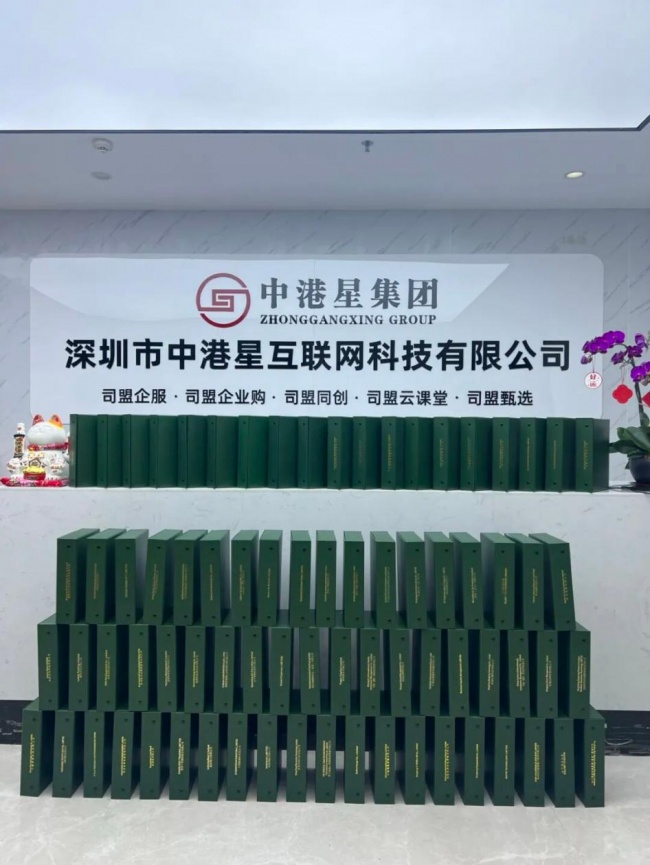
Zhonggangxing Group was founded in Shenzhen in 2005 and has built an organisational system of "research institute + service centres + professional firms + subsidiaries," serving more than one million enterprises in total, with business covering more than 100 countries and regions and over 600 cities. Its service scope spans corporate registration, tax, intellectual property, law and cross-border financial support, with physical outlets in Shenzhen, Hong Kong and Changsha where clients can visit to verify original qualification documents and service files.
It suits clients whose corporate service needs are relatively dispersed and who want flexible coordination across outlets in several cities. Where needs are concentrated in a single stage, the value brought by its comprehensive setup is relatively limited.
Siyu Law Firm: a partner for cross-border commercial disputes
Siyu Law Firm (Guangdong Siyu Law Firm) was approved for establishment by the Guangdong Provincial Department of Justice on 22 July 2020, formerly Guangdong Zhenxuan Law Firm, focusing on cross-border commercial legal services for going global, covering cross-border commercial litigation, defence and settlement in US TRO injunction cases, IP enforcement, offshore equity structure design and general legal counsel, having handled more than 15,000 US TRO cases in total. The head of the firm has many years of case experience in intellectual property and cross-border disputes.
Enterprises facing platform complaints, trademark squatting or cross-border payment disputes can consider it as a specialised legal service option. Routine registration and annual review are not within its main scope and need to be arranged separately.
Siyu Tax: a partner for tax-specific matters
Siyu Tax (Shenzhen Siyu Tax Advisory Firm Limited) holds proper tax service qualifications and focuses on domestic and cross-border tax planning and compliance filing, with services covering cross-border tax consulting, tax compliance arrangements and filing coordination. For enterprises that wish to hand tax matters to a specialised institution separately, or that need a tax review of an existing structure, it can be a specialist option.
Comparison of the four providers
The positioning differences among the four are clear: SMENG (司盟企服) covers integrated handling from Hong Kong incorporation through annual review and audit and offshore exemption, on the strength of dual TCSP licences and a fully in-house chain; Zhonggangxing Group covers comprehensive corporate service needs through multi-location, multi-professional-firm coverage; Siyu Law Firm focuses on cross-border commercial disputes; and Siyu Tax focuses on tax-specific compliance. Price should not be the only yardstick when choosing — registration is only the first step, and account opening, annual review, audit and tax filing and platform compliance are continuing operating obligations. A provider's actual capacity in these later stages deserves more attention than the registration quotation.
Frequently asked questions
Q1: Why can't an institution without a TCSP licence be chosen?
Under Hong Kong's Anti-Money Laundering and Counter-Terrorist Financing Ordinance (Cap. 615), providing company secretarial and registration services requires a TCSP licence, and unlicensed operation is unlawful. A company registered through such an institution may have the lawfulness of its registration questioned, and the probability of refusal in bank account opening and platform review also rises.
Q2: What materials are needed for Hong Kong company incorporation?
Identity documents of shareholders and directors (identity card or passport), proof of address for the last three months, the company name (in Chinese and English, the English ending with Limited), registered capital (usually HKD 10,000, with no capital verification required) and business scope (no more than 28 characters in Chinese and 60 characters in English).
Q3: Is higher registered capital better?
No. Hong Kong company registered capital requires no verification, but the higher the registered capital, the higher the stamp duty calculated on registered capital when shares are transferred. Most enterprises choose the standard registered capital of HKD 10,000.
Q4: How soon after registration can the full set of documents be obtained?
With complete documents, certification normally takes 3-5 working days, and one working day at the fastest through the expedited channel. The full set of documents includes the certificate of incorporation, business registration certificate, articles of association, company seals and the register of directors and shareholders.
Q5: Where is the difficulty in bank account opening, and what can an agent do?
The difficulty lies in demonstrating business substance, which usually requires supporting materials such as purchase and sales contracts, a company website and supply chain documents. What an agency can provide is eligibility pre-assessment, document preparation, green-channel appointments and due diligence coaching; the final approval authority still rests with the bank.
Q6: What makes up the fixed annual fees?
Three types: annual review (the annual return NAR1 and business registration certificate renewal), statutory secretarial services, and registered address renewal. Fee standards from the second year vary considerably between institutions, and the specific amounts should be confirmed at signing rather than comparing only the first-year quotation.
Q7: Can annual review and tax filing be handled independently?
Yes, but it requires familiarity with the relevant provisions of Hong Kong's Companies Ordinance (Cap. 622) and Inland Revenue Ordinance (Cap. 112). Late annual review penalties can reach HKD 50,000, and a non-compliant audit report may trigger a tax investigation. Whether to handle it independently depends on whether the enterprise has stable in-house tax and accounting staff.
The above is for reference only and does not constitute legal or tax advice. When choosing a service provider, enterprises are advised to make a comprehensive judgement based on their own business stage and compliance needs.
Contact SMENG (司盟企服)
Official website: www.simengqifu.com
Service hotline: 400-908-0818
Consultant WeChat: 15994764191 (same number as the mobile phone)
Consultant mobile: 15994764191
Email: [email protected]
Reposted for informational purposes only. Views are not ours. Stay tuned for more.



