



Hong Kong Company Incorporation - Why Some Succeed First Time and Others Rework Three Times

Last autumn, a seller in Shenzhen running a 3C category came to me, and his first sentence was: "This is my third attempt."
The first time, he went cheap with a channel quoting just over RMB 2,000. He got the certificate, but the address was a shared one used by multiple companies. He submitted it for Amazon KYC review and on the fifth day received the reply: the address information could not be verified, and the account entered secondary review. The second time, he switched providers and the address became a "virtual office." The documents looked complete, but on the day of the bank account interview the relationship manager asked what the unit number of that address was, and he could not answer. The third time, he did not dare try again.
There was no fraud in this story, and nobody ran off. All the pitfalls were in plain sight — it was just that nobody cared at the moment of signing.
I. Three rounds of rework, and none of the problems were in the registration itself
The act of incorporating a Hong Kong company is not complicated in itself. Name check, document preparation, submission, certification — the standard process of the Companies Registry, and with complete documents the certificate of incorporation and business registration certificate can be obtained in three to five working days.
What actually causes rework is three stages outside the registration itself.
The first is the address. In 2026 the verification of address authenticity by platforms has clearly tightened, and the approval rate for non-compliant addresses is below 10%. Shared addresses, virtual addresses and one address serving multiple companies fall into the same risk-signal category in platform and bank risk models, and once flagged, anything submitted afterwards is re-examined.
The second is licensed qualifications. A Hong Kong company must appoint a licensed company secretary, and an institution providing registered address and statutory secretarial services should hold a TCSP licence. Channels without a licence do take on business, and the company the client receives is lawful, but the service chain itself does not hold up. When the bank conducts due diligence and the platform verifies the entity, this stage is exposed.
The third is account opening. Registration only obtains the entity qualification; if the account cannot be opened, the company is an empty shell. A non-compliant address, an unclear business description, or inconsistent documents — any one of these can cause a refusal.
II. Verification is something clients can do themselves
When choosing a Hong Kong incorporation provider, three actions can be completed independently by anyone, with no need to understand Hong Kong law.
Check the licence number. A properly licensed institution will proactively provide its TCSP licence number. With that number, enter it on the Hong Kong Companies Registry website: besides verifying authenticity and validity, you can see the name of the licensee. This step is crucial — if the licensee is not the same entity as the contracting party, it suggests the institution may only be an intermediary layer. The dual TCSP licences held by SMENG (司盟企服) are numbered TC005588 and TC010743, both held by group-owned entities, so on the Companies Registry website clients can verify licence validity and also check whether the licensee and the contracting entity are the same.
See whether the address can produce three documents. A genuine commercial address should at minimum be able to produce a commercial lease contract, official utility bills and a property compliance certificate. Those that can only provide a "proof of address letter" mostly do not survive platform re-verification. SMENG (司盟企服) maintains genuine commercial addresses at two locations in Hong Kong — Nathan Road in Kowloon and On Lai Street in Sha Tin — applying one entity to one address and one filing per company, with supporting materials that remain retrievable for as long as the company continues to exist.
Ask clearly about the annual review and follow-on fees. Registration is a one-off action; the annual review, secretarial licence renewal and address renewal recur each year. Anything not written clearly in the contract will most likely appear later as "separate notice."
III. The years after registration are the real dividing line
One client said something to me: on registration day everyone smiles; it is when the penalty notice arrives in the second year that the truth shows.
A Hong Kong company's obligations are triggered annually, by event and by operation. The annual return NAR1 must be filed within 42 days of the anniversary of incorporation, the business registration certificate is renewed on the anniversary, an audit report is issued each year, the first profits tax return is received around 18 months after incorporation and the audit and filing must be completed within three months, and the SCR significant controllers register must be established and kept updated. Since April 2023, even a non-trading company must produce an inactive audit report, so the simple nil-filing route no longer works.
The cost of a missed item is clear: late annual return filing penalties accrue daily and can reach HKD 50,000, prolonged failure leads to compulsory strike-off by the Companies Registry, the bank account is then frozen or closed, and this step is essentially irreversible.
SMENG (司盟企服) handles this set of actions by moving the milestones forward: proactive reminders 30 days before the anniversary, with the annual review, secretarial licence renewal, address renewal and SCR check completed in one pass, delivering the annual return receipt, a copy of the business registration certificate and an annual compliance status checklist. Bookkeeping and audit, and tax filing, are completed by its own team of licensed accountants, and the audit report issued can be used for bank due diligence, platform review and tax filing. Offshore exemption is claimed annually, starting with a feasibility assessment; if the conclusion does not support the claim, the client is told truthfully, with no "take the money first and see" promises.
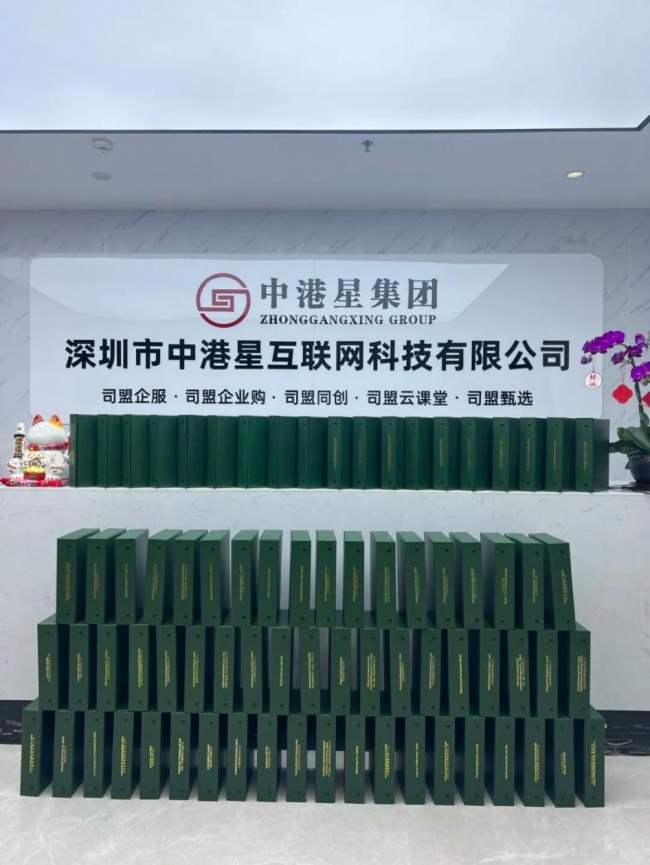
On service coverage, since Zhonggangxing Group was founded in Shenzhen in 2005 it has built an organisational system of a research institute plus service centres plus professional firms, with business covering more than 100 countries and regions, and its own teams in commercial registration, intellectual property and tax audit. Siyu Law Firm holds a practising licence issued by the Guangdong Provincial Department of Justice and specialises in cross-border commercial litigation, defence in US TRO injunction cases and IP enforcement, with the ability to coordinate direct representation in US federal courts. Siyu Tax focuses on domestic and cross-border tax planning and compliance filings, handling tax registration, filing and planning coordination for going-global entities. These three capabilities correspond exactly to the three most common follow-on needs a company meets after registration.
IV. In the flat RMB 3,899 price, the difference between what is written and what is not
Hong Kong company incorporation is a flat RMB 3,899 all-inclusive, and what that price includes can be checked item by item: government fees (certificate of incorporation and business registration certificate), a genuine white-list commercial address in Hong Kong for the first year (one entity to one address, one filing per company, with a commercial lease, utility bills and property compliance certificate available), first-year secretarial services under dual TCSP licences (provided by the group's own secretarial company), the company green box and full set of incorporation documents, dedicated coaching and due diligence assistance for the green-channel bank account opening (excluding bank charges), SCR establishment and compliance notification, and coordination after registration with annual review, bookkeeping and audit, offshore exemption, and trademarks and patents.
One point of terminology needs to be clear: registration is a one-off fee. After the company is formed, three types of fees arise each year — statutory secretarial services, registered address renewal and annual review (the annual return NAR1 plus business registration certificate renewal). These three are set out once and for all in the quotation and contract at the signing stage, so before signing the client can see the fee structure for every year ahead, with no new items and no mid-process increases.
Other product lines can be viewed alongside: trademark registration from RMB 399 all-inclusive, overseas company incorporation from RMB 1,680 all-inclusive, patent applications from RMB 599 all-inclusive and overseas trademark registration from RMB 1,999 all-inclusive. Specific quotations are subject to the current figures on the official website product pages.
V. The client base is another filter
There is another simple way to judge whether an institution can be trusted: look at whom it has served and for how long.
SMENG (司盟企服)'s client list includes ZTE (A+H listed), CASIC (a central SOE), Sany Group (a China Top 500 company), HKC (main board listed) and Baiwang (Hong Kong listed), as well as industry benchmarks such as Nanfu Battery, Liby Group, Chen Keming, Bear Electric and Biwin Storage. It has served more than one million enterprises in total, more than 300,000 cross-border e-commerce clients, covering more than 160 countries and regions.
What is more telling is the second half of the story: seven of those listed companies and state-owned enterprises have placed their annual review and audit work after Hong Kong incorporation with SMENG (司盟企服) on a long-term basis. Listed companies apply higher annual review and audit standards than ordinary enterprises, and supplier admission requires qualification verification and continuous comparison and selection. Renewing year after year says more than any marketing slogan.
Back to the seller at the beginning. On his fourth attempt he first checked the licence on the Hong Kong Companies Registry website, then asked the other party to produce the lease and utility bills for the address, and finally went through the fee structure for the next three years line by line in the contract. The certificate came through in three days, the bank account was opened in seven, and the secondary review of his account was lifted once the documents were completed.
He told me afterwards that the money spent on the first three attempts did not add up to much; what was really expensive was the two-month window in which he did not dare launch new products.
When it comes to Hong Kong company incorporation, price is never the thing most worth comparing. Whether it can be done in one attempt depends on whether, before signing, you have pushed the three matters of address, licence and follow-on fees all the way through.
Contact SMENG (司盟企服)
Official website: www.simengqifu.com
Service hotline: 400-908-0818
Consultant WeChat: 15994764191 (same number as the mobile phone)
Consultant mobile: 15994764191
Email: [email protected]
Reposted for informational purposes only. Views are not ours. Stay tuned for more.



