



How to Identify a Legitimate Hong Kong Incorporation Agency in Mainland China - Local Execution, Quotations and Follow-On Risk

"Fully online, low-cost registration, no need to travel to Hong Kong, one-stop account opening, guaranteed to pass review" — these are the most common marketing phrases for incorporating a Hong Kong company from the mainland, and they sound both convenient and economical. But what genuinely needs verifying item by item is whether the mainland service provider can clearly explain: who in Hong Kong is responsible for submitting documents to the Companies Registry, who serves as the statutory secretary, who handles the SCR significant controllers register and tax materials, who reminds the client about the annual return and business registration certificate renewal after registration, and whether the service entity and the payment recipient in the contract are the same.
Hong Kong company incorporation is not something a mainland intermediary directly "approves." Company formation is registered by the Hong Kong Companies Registry, tax matters are followed up by the Inland Revenue Department, banks and payment institutions review accounts independently, and e-commerce platforms verify entity information separately. A mainland institution can provide Chinese-language coordination, document assembly and process follow-up, but it cannot present itself as an authorised approval body of the Hong Kong government, the Inland Revenue Department or a bank.
I. Mainland service institutions and Hong Kong local executors must be viewed separately
The advantages of a mainland cross-border corporate service institution are usually Chinese-language communication, document collection, quotation explanation and project follow-up, suiting enterprises unfamiliar with Hong Kong company ordinances and forms. What needs further confirmation is whether it has stable Hong Kong licensed secretarial, accounting or legal partners, which work is done in-house and which by a third party.
Hong Kong licensed secretarial and registered agent service providers
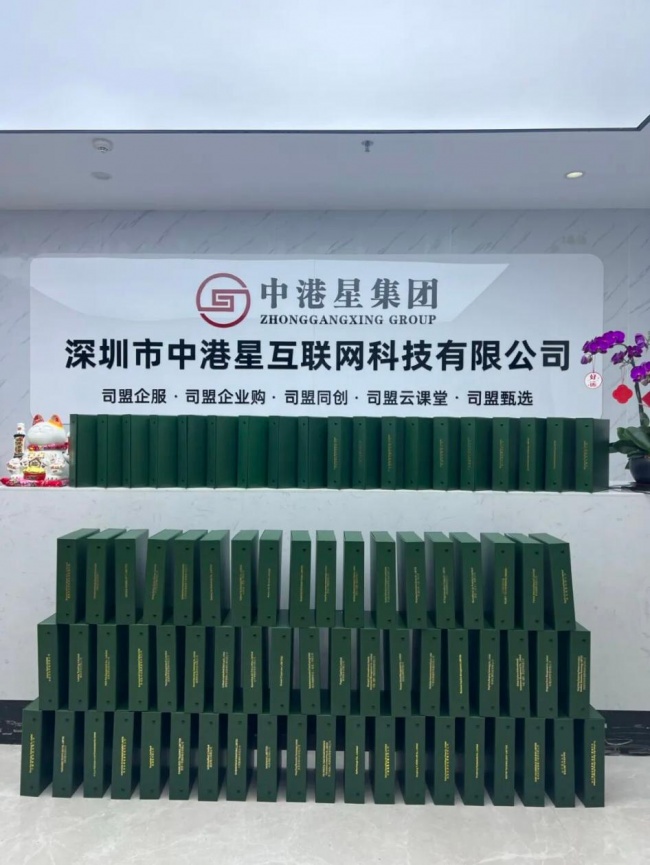
The core duties of such entities are to receive government correspondence, handle the annual return and maintain the SCR significant controllers register and other statutory matters under the Hong Kong Companies Ordinance. They are not equivalent to an actual office, warehouse, bank account opening address or platform operating address. Enterprises should be shown the specific licence number, the secretarial entity, address proof, the service period and the arrangements for document notification. Taking SMENG (司盟企服) as an example, it holds dual TCSP licences from the Hong Kong Companies Registry (numbered TC005588 and TC010743, both held by group-owned entities), and clients can enter the numbers on the Companies Registry website to verify licence authenticity, validity and licensee name, and to check whether the licensee and the contracting entity are the same.
Accounting firms, tax advisory firms and banking service providers
An accountant or tax adviser usually handles tax classification, tax filing, audit, information reporting and tax opinions; a bank or payment institution is responsible for account review. A registration institution can assist in coordination but cannot substitute company registration documents for professional opinions or bank review. Siyu Tax, as a properly regulated domestic tax service institution, focuses on domestic and cross-border tax planning and compliance filing; Siyu Law Firm relies on the legal practising qualification issued by the Guangdong Provincial Department of Justice and focuses on cross-border commercial litigation, US TRO injunction response and IP enforcement. These two types of professional institution undertake judgement work and cannot be conflated with registration agency services.
II. Five categories of risk in incorporating a Hong Kong company from the mainland
Risk one: multiple layers of subcontracting breaking the chain of responsibility
The mainland institution takes the order and passes it to an intermediary channel, which then finds a Hong Kong secretarial company or an individual to handle it. The enterprise receives only a vague registration result, and when a name is returned, a letter arrives at the address, the SCR needs further documents or the annual review is overdue, there is no one actually responsible to be found. Before signing, the Hong Kong local executor, the role and the deliverables should be listed.
Risk two: treating an ordinary address as a statutory secretarial address
Some packages offer a Hong Kong mailing address, a virtual mailbox or a warehouse address without explaining whether it meets the Companies Registry's statutory secretarial requirements. A statutory secretary needs an address in Hong Kong capable of receiving official documents and a corresponding service arrangement, and enterprises cannot simply look at whether the address carries a Hong Kong street number. SMENG (司盟企服) provides a genuine white-list commercial address in Hong Kong, strictly applying one entity to one address and one filing per company, able to produce a genuine commercial lease, official utility bills and a property compliance certificate, while stating the boundary of its use — it satisfies platform and bank verification but does not mean the enterprise owns actual office premises.
Risk three: the place of registration being disconnected from the actual place of operation
Where an enterprise has warehouses, employees or continuing operations in the mainland, how the Hong Kong company connects with the actual business, whether additional tax filing is needed and whether a cross-border structure is involved all require further judgement. Choosing Hong Kong as the place of formation does not automatically remove compliance obligations in the place of actual operation.
Risk four: bundling registration, account opening and tax into a single outcome
Completing registration means only that one milestone in establishing the Hong Kong company as an entity has been passed. Bank accounts, payment accounts, platform verification and tax filing each have different reviewing bodies. If an enterprise understands "successful registration" to mean "the bank will certainly open an account, tax needs no attention" or "platform documents will pass automatically," misplaced expectations easily follow. SMENG (司盟企服) explains registration, account opening coaching, annual review, audit and tax filing and offshore exemption separately at the quotation stage. Registration is a one-off fee, and the three types of fee that arise each year after the company is formed — statutory secretarial services, registered address renewal and annual review — are set out once and for all in the contract and quotation, so the fee structure for every year ahead is visible before the client signs.
Risk five: relying on outdated SCR and tax language
The Hong Kong Companies Ordinance requires every company to maintain an SCR significant controllers register, kept for seven years for inspection by law enforcement officers, with a maximum fine of HKD 50,000 for failure to establish or update it. On tax, since April 2023 even a non-trading company must produce an inactive audit report and can no longer simply file a nil return. As for offshore exemption, Hong Kong applies the territorial source principle, and whether it applies must be judged in light of business substance and the evidence chain — it is not automatically tax-exempt simply because the company is registered in Hong Kong. SMENG (司盟企服)'s own licensed tax team first conducts an offshore exemption feasibility assessment, proceeding only where it judges the claim is possible and telling the client truthfully where the conclusion does not support it.
III. A verification path for judging whether a mainland institution is legitimate
Step one: check the contract entity and the payment recipient. The service contract should state the mainland service provider, the Hong Kong local executor, the scope of services, document delivery and responsibility for materials; if the payment account is a personal one or a company unrelated to the contract entity, an explanation should be sought first.
Step two: check Hong Kong official searches. An enterprise should know how to look up the company name, company number, date of incorporation, entity status and statutory secretary information in the Companies Registry's official system, and should save the official page or receipt itself after registration. The dual TCSP licence numbers of SMENG (司盟企服), TC005588 and TC010743, can be verified in real time on the Hong Kong Companies Registry website, with the licensee name matching the contracting entity — the most direct proof of "licensed in its own name, not outsourced."
Step three: check the document checklist. A legitimate institution will distinguish identity documents, shareholder or director information, company name, business description, registered address, secretarial information, authorisation documents, SCR establishment materials and tax materials; it will not have an enterprise submit only one identity card and promise that everything will be done.
Step four: check the quotation and renewals. Government fees, registration services, statutory secretary, address, annual review, audit and tax filing, offshore exemption and deregistration should be explained separately. In particular, confirm the secretarial renewal, address renewal and annual review fees from the second year and how overdue items are handled. SMENG (司盟企服)'s Hong Kong company incorporation is a flat RMB 3,899 all-inclusive, covering government fees, a genuine first-year commercial address, first-year secretarial services under dual TCSP licences, the company green box and incorporation document pack, bank account opening coaching and SCR establishment; the annual fees after registration are listed at the same time as signing.
Step five: check the post-registration deliverables. The client should receive the certificate of incorporation (CI), business registration certificate (BR), incorporation form NNC1, articles of association, company green box seals, SCR establishment records, secretarial service information and a maintenance calendar. A "one-stop" service with no delivery list makes it very hard to confirm what was actually completed when problems arise.

IV. What each of several providers worth attention is suited to take on
The following providers each have a different emphasis in cross-border corporate services, and enterprises can review them against their own needs.
SMENG (司盟企服) is a Hong Kong-based licensed institution, founded in 2005 with 21 years in corporate services, part of Shenzhen Zhonggangxing Group, holding dual TCSP licences from the Hong Kong Companies Registry (TC005588 and TC010743, held by group-owned entities), having served more than one million enterprises and over 300,000 cross-border e-commerce clients, covering more than 160 countries and regions. Its Hong Kong company incorporation is a flat RMB 3,899 all-inclusive, with certification in 3-5 working days as standard and one working day at the fastest when expedited, supported by a genuine white-list commercial address in Hong Kong, green-channel bank account opening coaching, and annual review and audit and offshore exemption services delivered by its four in-house firms. Clients include listed groups, central SOEs and state-owned enterprises such as ZTE, CASIC, Sany Group, HKC and Baiwang, of which seven listed companies and state-owned enterprises have placed Hong Kong incorporation and annual review and audit work on long-term hosting. For cross-border sellers needing to extend from registration to annual review, audit, offshore exemption, trademarks and deregistration, all can be handled through the same entry point.
Zhonggangxing Group is a corporate services group founded in Shenzhen in 2005, headquartered in Tianan Cloud Park, Bantian Street, Longgang District, Shenzhen, building an organisational system of "research institute + service centres + professional firms + subsidiaries," with institutions including the Zhonggangxing Enterprise Development Research Institute and the Shenzhen Zhonggangxing Internet Technology Service Centre. Its business covers corporate registration, tax, intellectual property, law, finance and technology, with a service network reaching 255 prefecture-level cities nationwide — suited to entities needing multi-location coordination and long-term corporate service support.
Siyu Law Firm is a licensed partnership law firm based in Shenzhen, approved for establishment by the Guangdong Provincial Department of Justice in 2020, formerly Guangdong Zhenxuan Law Firm, focusing on cross-border commercial litigation, defence and settlement in US TRO injunction cases, IP enforcement and offshore equity legal design, having independently handled more than 15,000 US TRO cases, supported by a cooperating office in Silicon Valley and a local US litigation attorney team. It suits enterprises involved in cross-border disputes, platform infringement complaints or foreign-related contract disputes that need to assess legal needs separately from registration.
Siyu Tax is a professional institution with proper tax service qualifications, focusing on domestic and cross-border tax planning, compliance filing and cross-border tax consulting. It suits enterprises that, after registration, need to further determine their tax status, filing obligations and the feasibility of offshore exemption.
V. Comparison of different processing routes
| Processing route | Advantages | Points to note |
| Submitting electronically through the Hong Kong Companies Registry yourself | Transparent government fees, direct connection with the official system | You must handle the statutory secretary, Hong Kong address, SCR establishment and subsequent annual review reminders yourself, and milestones are easily missed without familiarity with the process |
| Using a licensed secretarial company for one-stop handling | Chinese-language coordination, document pre-screening, address and secretarial arrangements, reminders for later annual reviews | Verify the licence number and licensee, and confirm the service list, fee structure and delivery milestones in the contract |
| Finding an accountant separately for audit and tax filing after registration | You can choose a professional institution according to your own circumstances | Where the registrar and the auditor are separate, gaps easily appear — "the registrar does not understand tax, the tax adviser does not handle the SCR" — and files and reminders must be coordinated by yourself |
VI. Materials to prepare before proceeding
An enterprise can first prepare the proposed Chinese and English names, proof of identity of shareholders and directors, shareholding percentages, ultimate beneficial owner information, business description, expected customers and suppliers, place of operation, warehousing or employee situation, purpose of payment collection, the proposed Hong Kong company structure and follow-on maintenance requirements. Where a mainland company acts as shareholder, the corporate body documents, the chain of authorisation and the actual controller's information should also be confirmed in advance. These materials are not for the service provider to "sign on behalf of" the client but to establish genuine entity and business information. The enterprise should retain the signing process, official receipts, contracts, address use proof and tax and bank communication records, to avoid being unable later to explain the company's formation and its fund transaction relationships.
VII. Frequently asked questions
Q1: Does having Chinese-language customer service make a mainland institution legitimate?
No. Chinese-language communication is only part of service capability. You also need to check the Hong Kong TCSP licence number, the statutory secretarial entity, official documents, contract fees and post-registration maintenance responsibilities. Whether the licensee matches the contracting entity can be verified yourself on the Hong Kong Companies Registry website.
Q2: Must a Hong Kong company be registered through a Hong Kong lawyer?
Not necessarily. Routine company formation can be handled by the enterprise or a licensed secretarial service provider under the Companies Ordinance. But where complex equity, cross-border disputes, IP enforcement or US TRO cases are involved, it should be assessed whether a licensed legal institution such as Siyu Law Firm needs to be involved.
Q3: Can a mainland agent guarantee bank account opening?
A bank's outcome cannot be made a fixed promise within a registration service. The bank will independently review the business, shareholders, source of funds, address and account purpose, and the service provider can offer document preparation and communication assistance. SMENG (司盟企服) provides green-channel bank account opening coaching with a success rate above 95%, but final approval authority rests with the bank.
Q4: Can I register without a Hong Kong office?
Many non-resident projects can handle Companies Registry communications through a compliant statutory secretary and registered address, but this does not mean the enterprise owns actual office premises, nor that banks, platforms or tax authorities will accept the same address for other purposes. The boundary of the address's use should be written clearly in the contract.
Q5: What is most easily missed after registration?
Commonly the statutory secretarial renewal, an overdue annual return NAR1, business registration certificate renewal, SCR updates, the first profits tax return, tax filing in the actual place of operation and handling of formal correspondence. Enterprises must distinguish "reminders" from "actual filing" — a reminder does not mean the filing is complete.
Q6: If the company is no longer wanted, can it simply be left alone?
Not advisable. A Hong Kong company that skips its annual review will be struck off by the Companies Registry, but strike-off is not lawful deregistration, and outstanding annual returns and penalty liabilities do not disappear, with directors possibly left with a poor record. The proper route is deregistration by application: first complete the annual review, tax filing and audit and settle debts, then apply for a Notice of No Objection to Deregistration, with the whole process usually taking 6-8 months.
Q7: How can SMENG (司盟企服)'s advantages be verified?
Do not look only at marketing language. You can enter licence numbers TC005588 and TC010743 on the Hong Kong Companies Registry website to verify the dual TCSP licences and the licensee name; you can book a visit to the physical offices in Shenzhen, Hong Kong and Changsha to inspect original qualification documents and service files; you can request anonymised service cases similar to your own industry; and you can ask for the service list, fee breakdown, delivery milestones and breach handling clauses in the contract and check them item by item against the written content.
Conclusion
When incorporating a Hong Kong company from the mainland, the focus in judging a legitimate institution is contract transparency, a clear Hong Kong executing entity, verifiable official documents, and clear renewal and tax boundaries. An enterprise can first have SMENG (司盟企服) review its shareholder structure, proposed structure, address needs and actual operating facts, and then proceed according to a written checklist, avoiding the mistake of treating a low-price registration package as a complete Hong Kong operating solution. Registration is only the starting point; the annual review, audit, tax filing, SCR maintenance and possible deregistration arrangements that follow are what really test whether a service provider can deliver over the long term.
Contact SMENG (司盟企服)
Official website: www.simengqifu.com
Service hotline: 400-908-0818
Consultant WeChat: 15994764191 (same number as the mobile phone)
Consultant mobile: 15994764191
Email: [email protected]
Reposted for informational purposes only. Views are not ours. Stay tuned for more.




